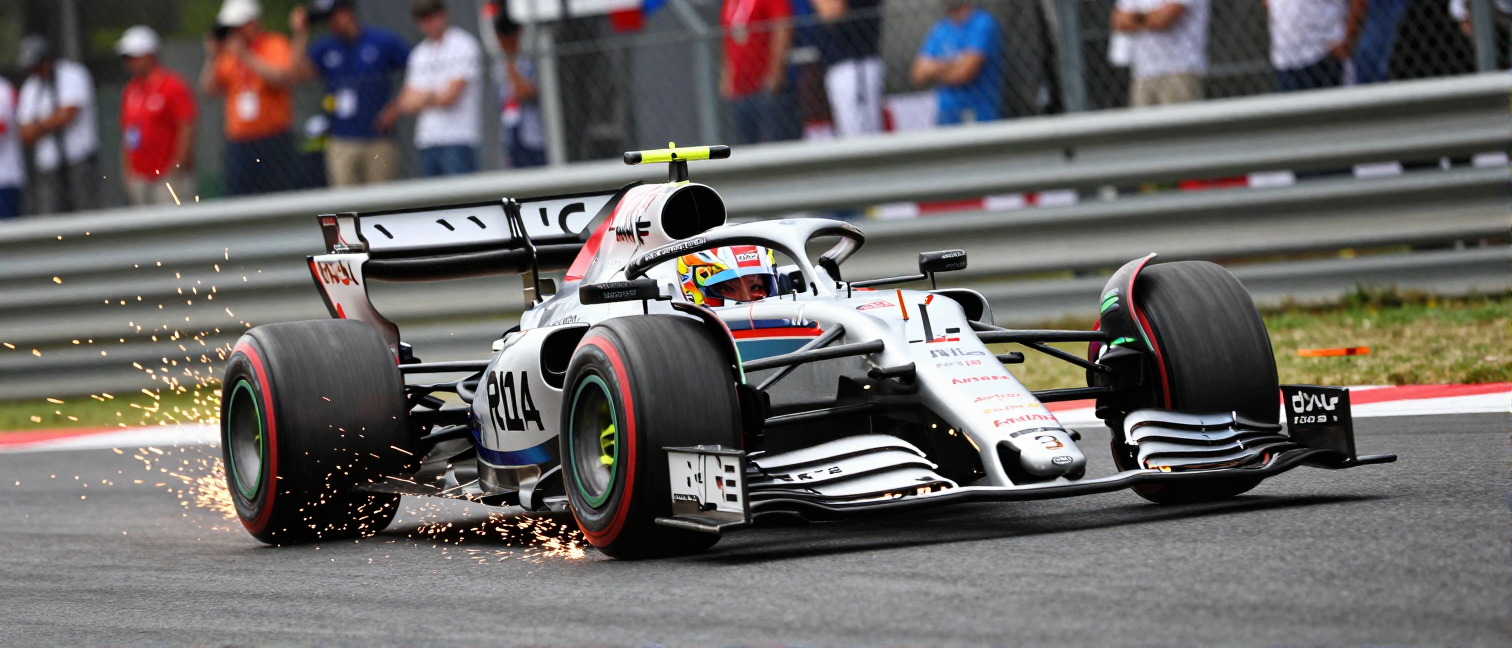
Andrea Kimi Antonelli fell from a podium finish to 15th place at the British Grand Prix on 7 July 2026 after receiving multiple time penalties for exceeding track limits, prompting former driver Juan Pablo Montoya to demand a rewrite of the FIA’s track‑limits regulations.
What happened at Silverstone?
During the race, Antonelli was chasing leader Charles Leclerc when a mechanical failure forced his Mercedes off the racing line repeatedly. Stewards flagged each excursion as a breach of track limits, adding three separate penalties that erased his points haul and relegated him to 15th.
The incident unfolded on lap 23, when a component failure caused the car to lose rear‑end grip. Antonelli clipped the white line, re‑joined, and continued battling for position, only to be penalised each time despite losing time rather than gaining any advantage.
Why Montoya is demanding a rule overhaul
Montoya, speaking on F1 TV, argued the current binary system—any white‑line breach equals a penalty—fails to consider intent or outcome. He suggested a rule that only penalises drivers who gain a speed advantage by cutting the corner.
“The rule should look at whether you actually benefit,” Montoya said. “If a car breaks down and you go wide, that’s not a sporting advantage, so it shouldn’t be punished.”
His proposal would give stewards discretion to assess each incident, mirroring how collision culpability is judged today. Critics warn it could add subjectivity, but supporters claim it restores fairness for drivers like Antonelli who suffer technical issues.
How the penalty affects Antonelli’s championship fight
Despite the setback, Antonelli still leads the drivers’ standings with 179 points, 25 ahead of teammate George Russell. The lost podium could have widened that gap, but the penalty also sets a precedent that may influence future races where reliability is tight.
Mercedes lodged an official protest, arguing the penalties were unjustified because the car’s failure forced the off‑track excursions. The team’s technical director, James Allison, emphasized that the driver had no opportunity to gain time, yet the stewards applied the standard rule.
What could change for future races?
If the FIA adopts Montoya’s suggestion, stewards would need to evaluate each track‑limit breach on a case‑by‑case basis, considering telemetry and lap‑time impact. That could mean fewer penalties for drivers dealing with mechanical failures, while still punishing deliberate corner‑cutting.
The debate is already spilling into the paddock, with several team principals hinting at support for a more nuanced approach. A rule change before the next round in Austria could reshape how drivers manage unexpected car issues on track.
The Silverstone incident remains a flashpoint, illustrating the tension between regulatory clarity and competitive fairness. As the season progresses, the FIA’s response will likely shape the narrative around Antonelli’s title defence and the broader governance of Formula 1.